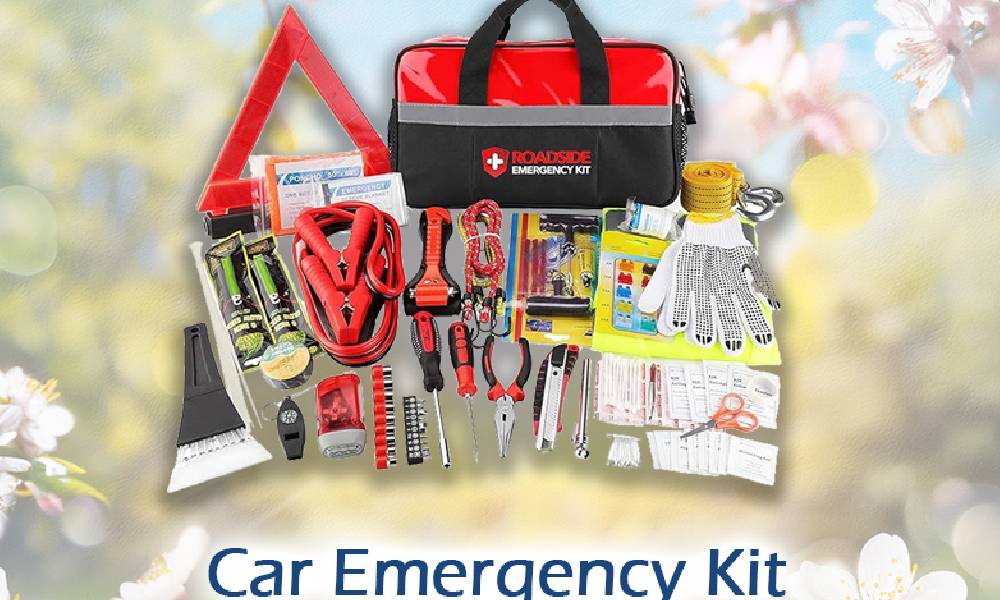
Every driver should maintain a comprehensive car emergency kit in their vehicle to handle unexpected situations and ensure safety on the road.
Start with safety
The foundation of any car emergency kit should include a comprehensive first-aid kit containing bandages, antiseptic wipes, antibiotic ointment, pain relievers, and any personal medications you may need. A flashlight with extra batteries, reflective vests, gloves, emergency triangles, and a vehicle-rated fire extinguisher create a protective foundation for handling emergencies on the road.
Bring the right tools
Jumper cables or a portable jump starter are crucial for addressing battery failures. A spare tire, jack, and lug wrench enable you to change a flat tire safely. Add a tire pressure gauge, portable air pump, screwdriver set, adjustable wrench, pliers, duct tape, electrical tape, and a multi-tool for minor roadside repairs.
Plan for the wait
Keep water, non-perishable snacks, blankets, wet wipes, hand sanitizer, and a phone charger or power bank nearby. Store insurance details, vehicle registration, emergency contact numbers, and roadside assistance information in a waterproof pouch.
Keep it ready
Organize everything in a durable, waterproof container that fits in your trunk. Check your kit every season to verify that batteries work, medications have not expired, and used items are replaced immediately after an emergency.